The MRGO Impacted a Million Acres of Wildlife Habitat. What’s Next?
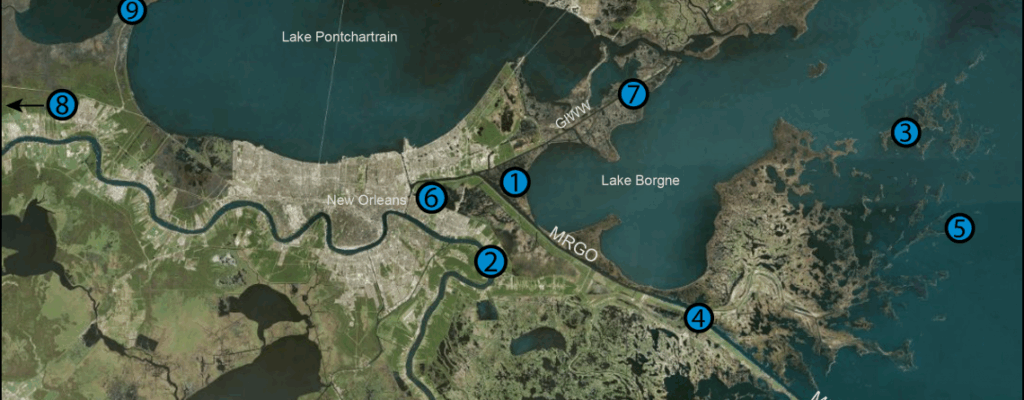
If you live, hunt or fish in coastal Louisiana or Mississippi, you’ve probably heard of the Mississippi River Gulf Outlet, or MRGO (pronounced ‘Mister Go’). The once-thought economically valuable shipping channel has impacted over one million acres of habitat in the Greater New Orleans, southeast Louisiana and southwest Mississippi areas, destroying cypress tupelo swamps, eroding marshes, and dramatically changing salinities across the Pontchartrain Basin.
Proposed in the ‘50s and completed in the ‘60s, the channel proved anything but economically valuable – it was wildly underused, and by the early 2000s had eroded from 650 feet to almost 3000 feet wide in some places. The channel funneled saltwater into freshwater wetlands for decades – destroying cypress forests, damaging freshwater fish habitat and altering the fishery for sportsmen in and around the greater New Orleans area.
At the height of the MRGO’s opening, fishermen in the area were catching sharks, pompano, redfish and trout in the channel, instead of the usual freshwater species like bass, sac-a-lait and catfish.
Then came Katrina, and the real dangers of the MRGO were realized. The channel became a storm surge superhighway, contributing to the devastating levee failures and subsequent flooding in St. Bernard Parish, New Orleans East and the Ninth Ward.
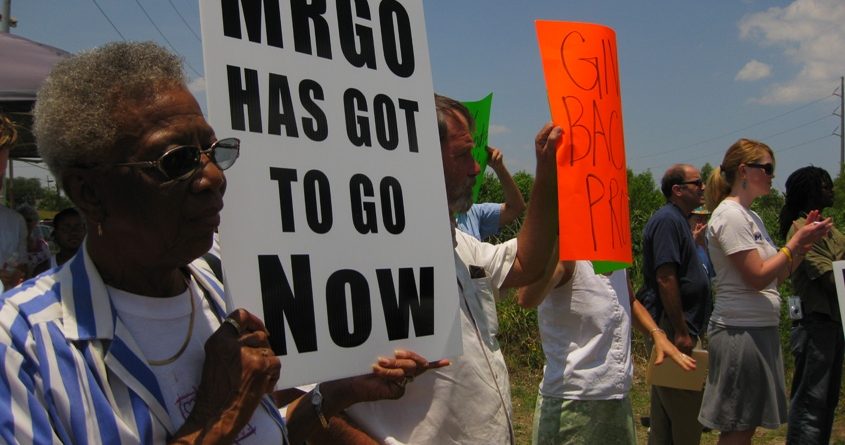
In the storm’s aftermath, community members and organizations, including the MRGO Must Go coalition, rallied to close the channel and restore the wetlands devastated by the saltwater it funneled. The channel was closed to navigation in 2009 with a rock dam, then further closed in 2013 with the Lake Borgne Surge Barrier.
These closures proved the extent of the channel’s saltwater damage – just a few years post-closure, oyster reefs could once again be found in the Biloxi Marsh, crawfish and largemouth bass could again be caught in nearby wetlands and even Rangia clams, which offer tremendous benefits for sportsmen, rebounded in Lake Pontchartrain.
But as for wetlands restoration? The communities and wildlife impacted by the MRGO are still waiting.
Congress authorized restoration of areas impacted by the MRGO by the U.S. Army Corps in the Water Resources Development Act (WRDA) of 2007, and a multi-billion dollar plan was completed in 2012. It took a decade for funding clarification, but with WRDA 2022, Congress stated that funding responsibility was 100% federal. Project design began with an agreement between the state and the Corps just this August, but funding has yet to be secured.
Salinity levels, and therefore fisheries, have seen a major rebound, so what’s the importance of wetlands restoration?
The MRGO knocked out centuries-old cypress forests, once havens for waterfowl. Stopover grounds in the Central Wetlands and in and around Lakes Borgne and Pontchartrain were lost to erosion and saltwater intrusion. And without these vital land buffers and transitioning freshwater marshes, communities and wildlife habitat alike are still at significantly increased risk during storms and hurricanes.

Restoring the wetlands destroyed by the MRGO will require a suite of projects, from marsh creations to hydrologic restorations to sediment diversions. Continuing to keep our eye and advocacy focused on this area, which encompasses a large swath of Sportsman’s Paradise, is vital to moving the restoration of this entire area forward.
Interested in learning more about the MRGO and restoration efforts? Read this recent NWF blog, check out this episode of Bayou Wilde TV or visit MRGOMustGo.org.
