Osceola Fever – It’s a Thing
Most of us are familiar with the term “spring fever” – an infectious condition that comes after a long winter when that first hint of warmer weather hits and makes it nearly impossible to think about anything else besides the change of season and all of the great outdoor activities that come with it. Come spring, an even worse strain takes down turkey hunters – “Osceola Fever!”
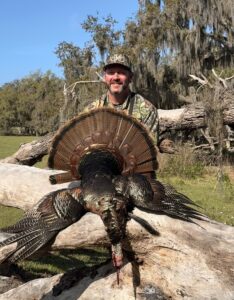
Osceola turkeys are only found in a limited range – Central and South Florida – and are the least common of the four better-known North American subspecies. Named after the great Seminole chief, the Osceola has unique characteristics, including long legs like a Rio, but long sharp spurs up to two inches long, due to fewer rocks and natural materials to grind them down. Hunting often involves a greater use of decoys and open terrain bordering swamps and working ranches.
The limited range of the Osceola makes them one of the most difficult birds to hunt. In order to harvest a true Osceola that has not crossbred with an Eastern, many hunters will target areas south of Orlando, much of which falls within the footprint of America’s Everglades. Due to encroachment from development and crowded public hunting lands, however, the birds become even more challenging to target. Gobblers are wary, and though they have a strong call, they will often remain silent, instead preferring for the hens to come to them. As a result, more extensive scouting is often required to help ensure a successful hunt.
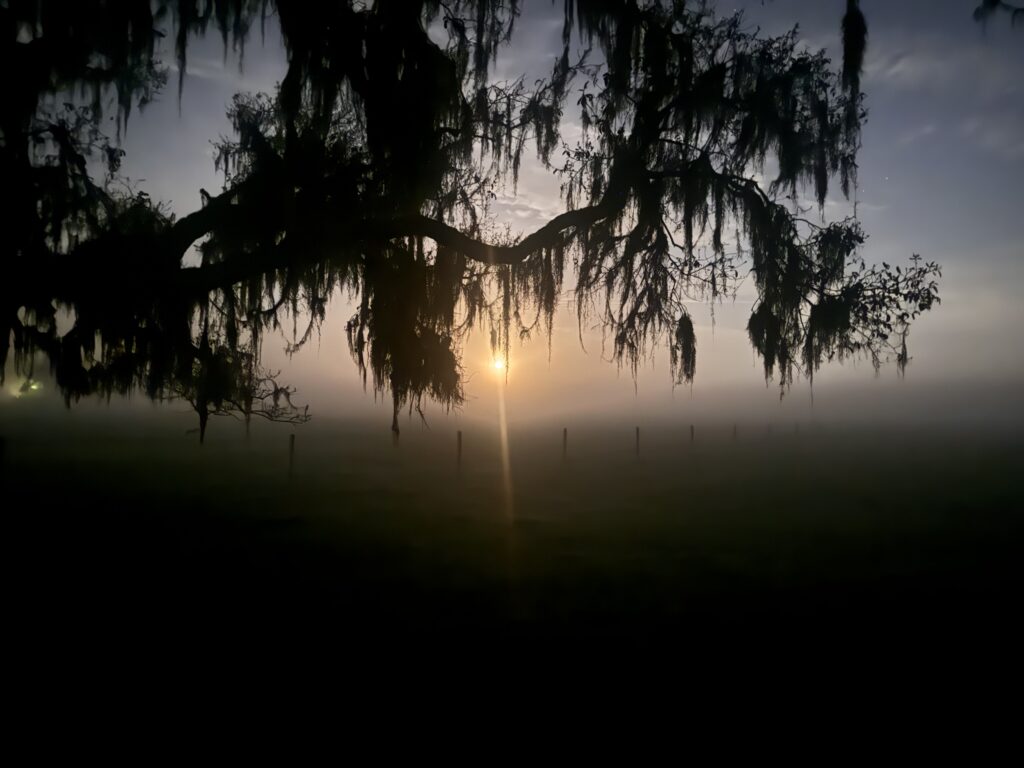
Two of my good friends, Marc Wyatt and Trey Sutton, recently fell victim to a bout of Osceola Fever and made plans to trek down to Florida and take a crack at harvesting one after getting an Eastern in Mississippi. Marc was hoping to shoot a “grand slam” (harvesting all four U.S. subspecies) during one season if he had success with the Osceola hunt. It’s quite an accomplishment for many turkey hunters to get one slam in their lifetime, much less in one season, given the travel and time commitment that it requires.
Trey claimed that he was not concerned about trying to shoot a grand slam during one season, but I could see when talking to him that he was gripped with the fever and was doing mental gymnastics to determine the possibility of a few additional trips in order to make a run at a single season grand slam. How important was it for him to actually be present for his daughter’s graduation? How much time did he REALLY need to spend in the office this spring? Which events that his wife had put on their calendar were truly necessary? These are the kinds of ridiculous questions that an infected turkey hunter will seriously ask themselves.
But I digress. The task at hand was for these two hunters to drive ten hours to Florida and harvest an Osceola before thinking about completing a grand slam with a Rio and a Merriam. As with all hunting and fishing trips, each day is different, and this hunting trip was no exception.
With less cover, Osceola hunting can be challenging, limiting your ability to move and putting increased focus on the use of decoys. Trey loved the different terrain and the challenge of the wide-open spaces, but noted that, ironically, one of the biggest challenges on his hunt was the sheer number of jakes in the area, which he thought would make it difficult to attract a gobbler. But the hunting gods were on his side, and he had one walk right up from behind him on that first morning. It eased off to visit with some hens, but kept talking to him and eventually came back into range. Mission accomplished.
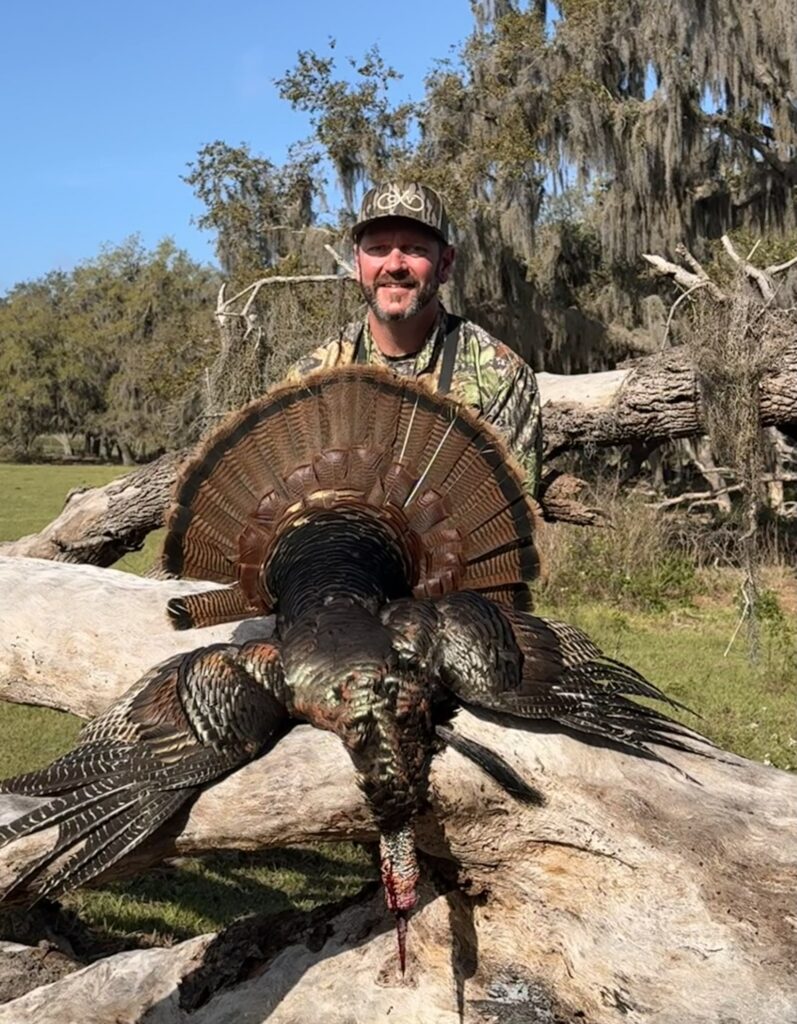
Marc was not as lucky on days one and two. The turkeys stayed far out of range, and the wide open space made getting closer an impossibility. On his third and final day, with time running out in the afternoon, it looked like his plans for a grand slam in one year may have run into an Osceola roadblock. He had a gobbler in the field, but it was strutting around a group of hens out of range for nearly four hours and wasn’t straying for the decoys. Just as the clock was running out on the day and the trip, a jake flew down from above into the decoy spread and started beating up on the decoys. The gobbler was having none of that and came right over to assert his dominance when Marc lowered the boom. The quest for a grand slam is still alive!
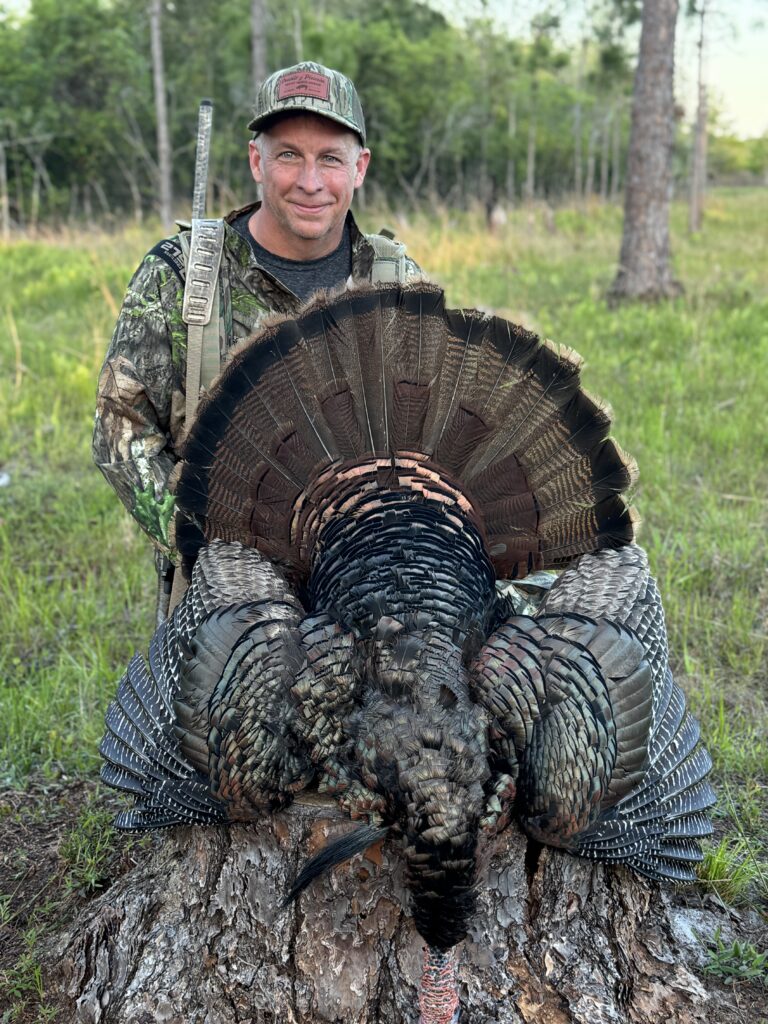
With a bucket list Osceola checked off, Marc now gets to head to Eldorado, TX for a Rio. Whether Trey will make it to his daughter’s graduation is yet to be seen. One thing was clear from both Marc and Trey, the Osceola experience was worth the wait. These unique birds and terrain highlight the need to conserve and restore connected habitat in Southern Florida and America’s Everglades to make sure that generations to come can share the experience and find a cure for their own Osceola Fever.